

Blog
Callebaut 811 vs 823 vs W2: Which Callebaut Chocolate Should You Use?

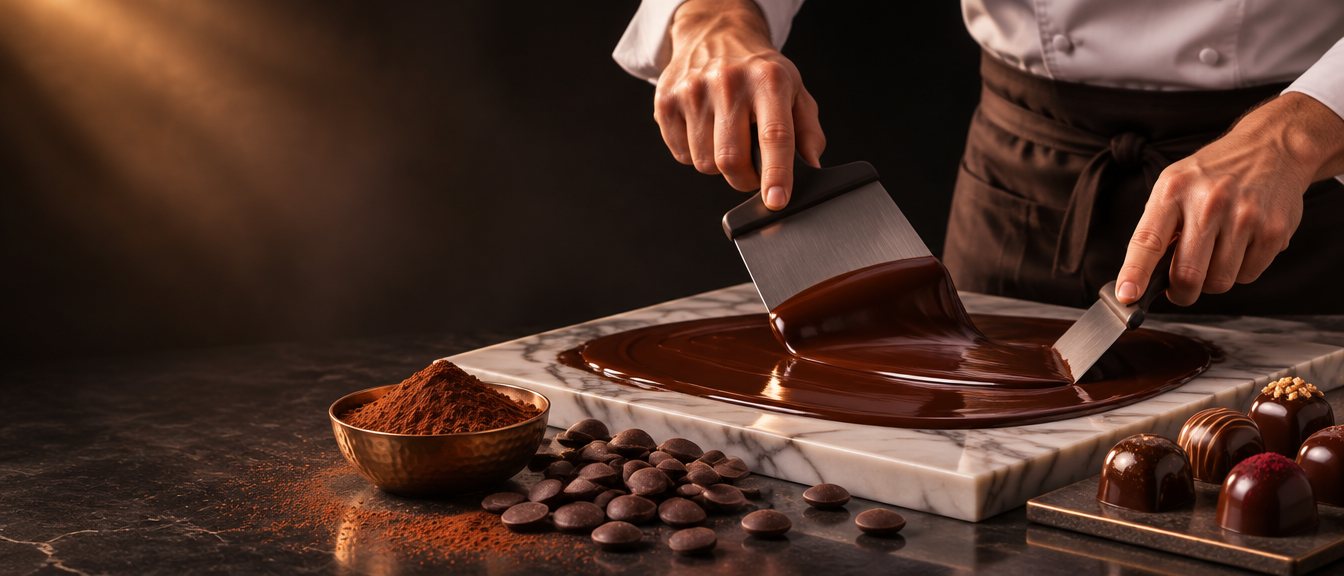
Callebaut’s three “recipe” chocolates — 811 (dark), 823 (milk) and W2 (white) — are the most used couvertures in professional pastry kitchens. They share the same medium fluidity, so once you know one, you can swap between them easily. Here is how they differ and when to use each.
Quick comparison
| Recipe | Type | Cocoa | Taste | Fluidity |
|---|---|---|---|---|
| 811 | Dark (semi-sweet) | 54.5% | Balanced cocoa, light fruit notes | 3/5 |
| 823 | Milk | 33.6% | Creamy, warm caramel | 3/5 |
| W2 | White | 28% | Milky, vanilla, not too sweet | 3/5 |
Callebaut 811 — the all-round dark chocolate
811 is Callebaut’s best-known chocolate. At 54.5% cocoa it is bold enough for ganache and mousse but not so bitter that it overpowers cookies, brownies or croissant fillings. Medium fluidity makes it suitable for moulding bars and bonbons, enrobing cakes and dipping. Many bakeries use 811 as their single “house” dark chocolate. Buy it in a 2.5 kg bag of 811 callets, a 10 kg box or as 5 kg blocks for shaving and chopping.
Need something more intense? Use a 70% dark such as Callebaut 70% callets for bitter-sweet ganache and sauces.
Callebaut 823 — the reference milk chocolate
823 is a 33.6% milk couverture with a pronounced caramel and milk taste. It is the go-to for milk ganache, bonbons, moulded bars, chocolate drinks and the pistachio-filled “Dubai chocolate” bars that are trending in Canada. Order 823 callets in 2.5 kg bags or a 10 kg box.
Callebaut W2 — the professional white chocolate
W2 (28% cocoa) has a clean milk and vanilla flavour that pairs well with fruit, matcha and pistachio. It is used for white ganache, mousses, coloured coatings (use fat-soluble colours), blondies and white chocolate chip cookies. See W2 callets 2.5 kg and the 10 kg box.
Tempering temperatures
- 811 dark: melt 45–50 °C → cool to 27–28 °C → work at 31–32 °C
- 823 milk: melt 45–50 °C → cool to 26–27 °C → work at 29–30 °C
- W2 white: melt 45–50 °C → cool to 25–26 °C → work at 28–29 °C
Callets make tempering by the seeding method easy: melt two-thirds, then stir in the remaining third of callets until the chocolate reaches working temperature.
Which one should I buy first?
If you only stock one, choose 811. Add W2 for white ganache and colour work, and 823 when you make bonbons, bars or milk chocolate desserts. For something different, try Ruby RB1 (naturally pink, berry notes) or Gold (caramelized white).
Pack sizes and pricing
Callets come in 2.5 kg bags (good for small bakeries and cafés) and 10 kg boxes (better price per kg for production). Case pricing is available on 8 × 2.5 kg and 2 × 10 kg. Compare every option on our Callebaut chocolate Canada page.
FAQ
Is Callebaut 811 semi-sweet or dark?
Both — 811 is a 54.5% dark chocolate that North American recipes usually call semi-sweet.
Can I use 811 callets as chocolate chips in cookies?
Yes, for a melty, puddle-style cookie. For chips that keep their shape, use bake-stable chocolate chips.
What do NV and CAU mean on Callebaut codes?
They are packaging formats: NV is the 10 kg box, CAU is the 2.5 kg bag. The chocolate recipe is the same.